
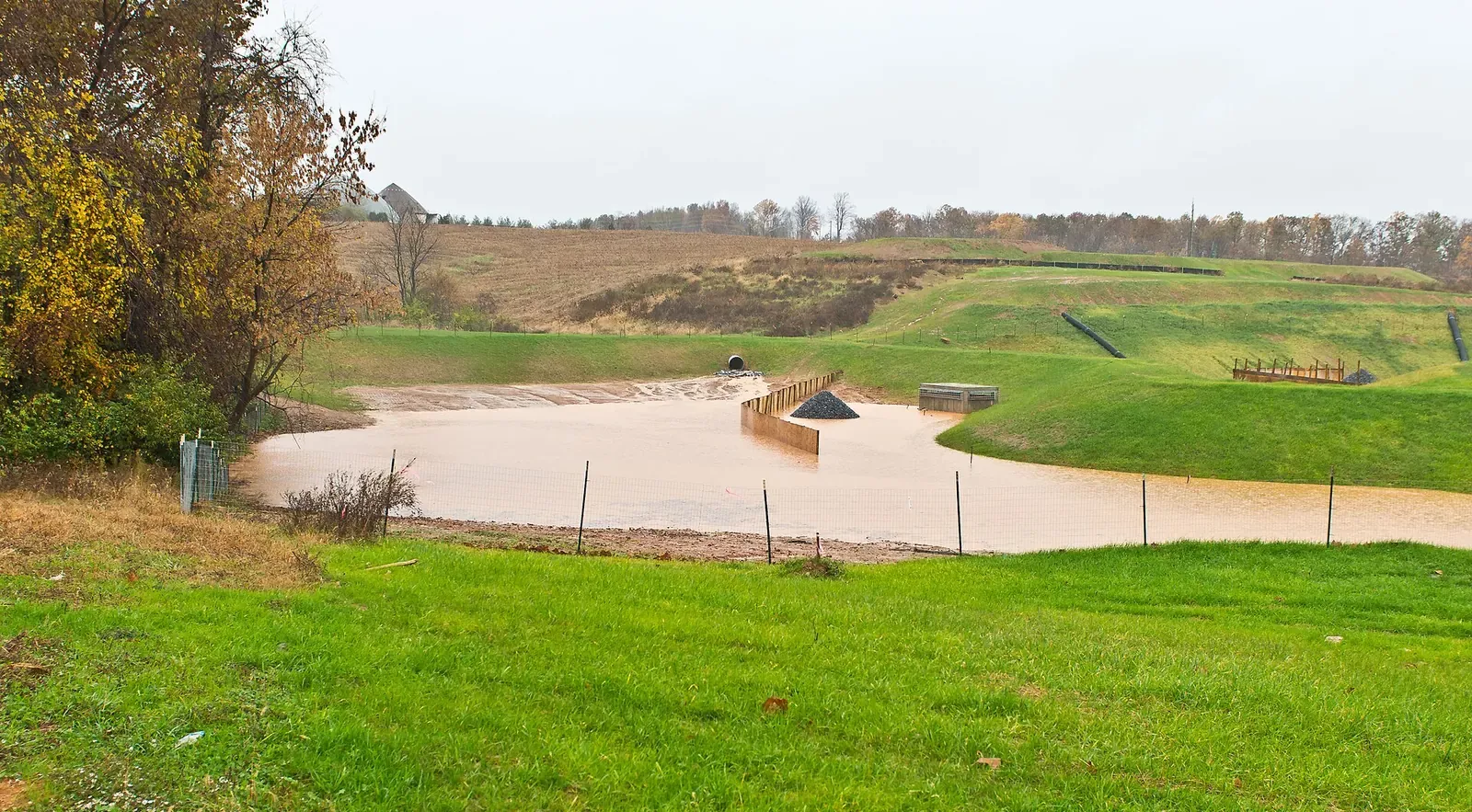
A storage facility is mostly roof and pavement, which puts it squarely in front of two state water programs. TCEQ's construction stormwater permit reaches a site that disturbs an acre or more and discharges to surface water.
Read the rest of the introduction
The Edwards Aquifer rule adds a plan that has to be approved before construction starts on the recharge zone, or in the contributing zone where five acres or more are disturbed, in eight counties that include Bexar, Comal, Medina, Hays, Travis and Williamson.
Step 6 of 10: Aquifer plan
- 01 Land and zoning
- 02 Special use permit
- 03 Plat
- 04 Site plan
- 05 TDLR review
- 06 Aquifer plan
- 07 Stormwater
- 08 Driveway access
- 09 Building permit
- 10 Occupancy
Where the Edwards Aquifer rule applies, construction may not begin until the required plan is approved, even if stormwater permit coverage is already in place.
SourceTexas Commission on Environmental Quality, TPDES Construction General Permit TXR150000 (2023), Part II.C.5 and Part II.E.5(a), read 2026-09-23.
Does the Edwards Aquifer rule reach my site?
The rule applies in eight counties: Kinney, Uvalde, Medina, Bexar, Comal, Hays, Travis and Williamson. Six of the counties this site covers are on that list: Medina, Bexar, Comal, Hays, Travis and Williamson. The recharge zone and the transition zone are whatever TCEQ's official maps show; the rule prints no county-by-county boundary for them. The contributing zone is the area upstream of the recharge zone, generally north and northwest of it, where runoff flows down to the recharge zone. The rule places it within all areas of Medina, Bexar and Comal Counties, within Hays and Travis Counties except areas draining to the Colorado River above a point 1.3 miles upstream of Tom Miller Dam, and within Williamson County except areas draining to the Lampasas River above the Stillhouse Hollow dam.
So the first step is the map. TCEQ's official zone maps decide which zone a parcel sits in, and this site does not read them for you. Look the parcel up, and have the civil engineer confirm it.
SourcesTexas Administrative Code, 30 TAC 213, Subchapter A title and Sec. 213.3(8), read 2026-09-23; Texas Administrative Code, 30 TAC 213, Subchapter B, Sec. 213.22(2), read 2026-09-23.
What plan does a storage site need, and when?
On the recharge zone, a commercial development files a Water Pollution Abatement Plan and gets approval before any construction starts. The plan includes a geologic assessment by a licensed professional geoscientist and permanent best management practices designed by a licensed engineer to remove 80 percent of the increase in total suspended solids the development causes. On a storage site, most of that increase comes from roof and pavement.
In the contributing zone, a Contributing Zone Plan is required only when the project disturbs five acres or more, or less as part of a larger plan that could disturb five or more. Below that line, no Edwards plan is needed in the contributing zone.
SourcesTexas Administrative Code, 30 TAC 213, read 2026-09-23; Texas Administrative Code, 30 TAC 213, Sec. 213.21(b) and Sec. 213.23(a), read 2026-09-23.
How long does TCEQ take, and what does it charge?
By rule, TCEQ declares an application administratively complete or deficient within 30 days, and finishes review within 90 days after it is complete. Copies go to affected cities, counties and groundwater districts, and anyone may comment. An approved plan expires in two years unless more than 10 percent is built, and on the recharge zone the applicant records in the county deed records, within 30 days of approval, that the property is subject to an approved plan.
Exhibit AEdwards plan application fee, non-residential site, by acreage
| Site acreage | Fee |
|---|---|
| Under 1 acre | $3,000 |
| 1 to under 5 acres | $4,000 |
| 5 to under 10 acres | $5,000 |
| 10 to under 40 acres | $6,500 |
| 40 to under 100 acres | $8,000 |
| 100 acres or more | $10,000 |
SourcesTexas Administrative Code, 30 TAC 213, read 2026-09-23; Texas Administrative Code, 30 TAC 213, Sec. 213.14(a) Table 1 and Sec. 213.27(b) Table 2, read 2026-09-23.
When does a storage site need construction stormwater coverage?
Everywhere in Texas, once the site disturbs an acre or more and discharges to surface water, or is part of a larger plan that will. Under five acres, the operator writes and follows a stormwater pollution prevention plan and posts a signed small construction site notice, with no Notice of Intent and no NOI fee, and gives a copy of the notice to any municipal storm sewer operator receiving the discharge. At five acres or more, the primary operator also files a Notice of Intent before construction, $225 electronically or $325 on paper, and files a Notice of Termination within 30 days after the site is stabilized.
A site that disturbs five acres or more, or is part of a common plan that will, is a large construction site, so a phased site counts the larger plan. The current general permit runs to March 5, 2028, and TCEQ has begun its renewal.
SourcesTexas Commission on Environmental Quality, Stormwater General Permit for Construction Activities, read 2026-09-23; Texas Commission on Environmental Quality, TPDES Construction General Permit TXR150000 (2023), read 2026-09-23.
Why the aquifer matters to the ground under a storage site
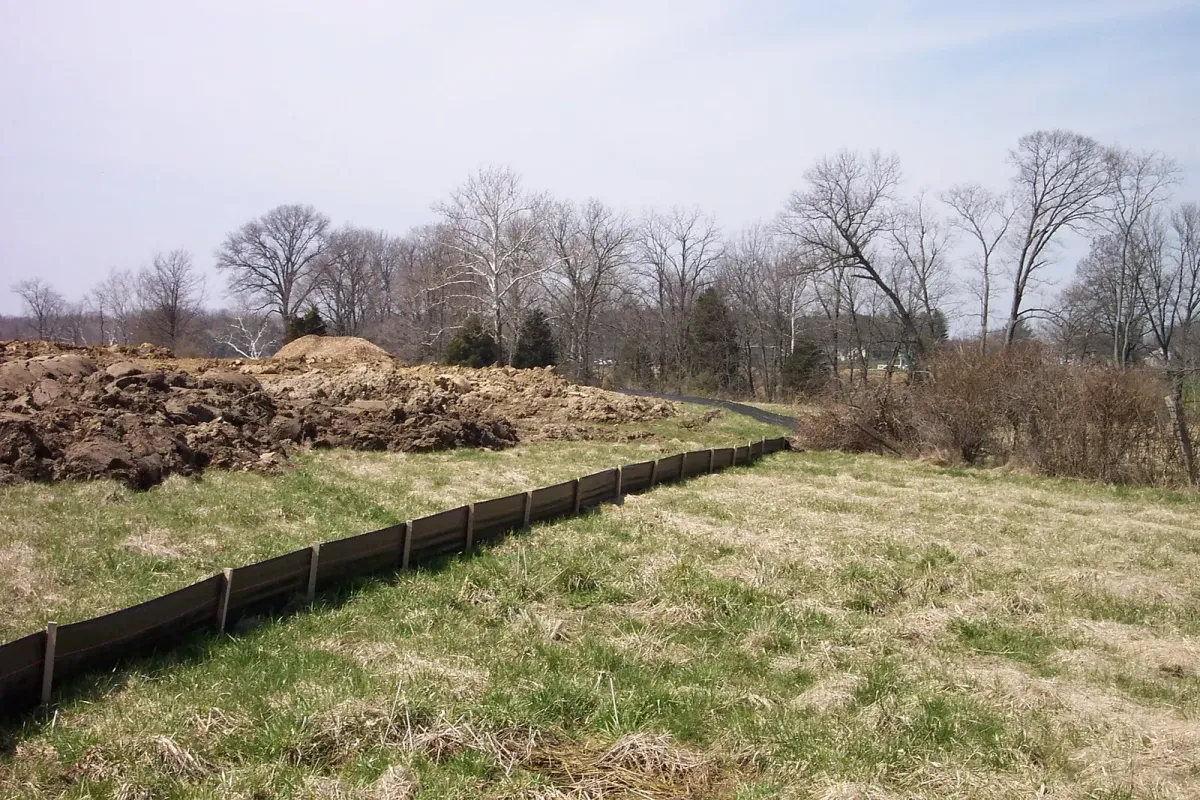
The Texas Water Development Board describes the Edwards as limestone, mostly partially dissolved, that recharges quickly through karst features, which is what makes it vulnerable to contamination, with runoff from urban areas a particular concern. On the recharge zone, the rule answers that concern directly: permanent best management practices have to remove 80 percent of the increase in total suspended solids the development causes, which on a storage site means treating runoff from its roofs and pavement.
SourcesTexas Water Development Board, Edwards (Balcones Fault Zone) Aquifer page, read 2026-09-23; Texas Administrative Code, 30 TAC 213, Sec. 213.5(b)(4)(D)(ii), read 2026-09-23.
Questions about Edwards Aquifer and stormwater rules for a storage site
Does a self storage facility need an Edwards Aquifer plan?
On the Edwards recharge zone, a commercial development needs an approved Water Pollution Abatement Plan before construction starts. In the contributing zone, a Contributing Zone Plan is needed only when five acres or more are disturbed, or less as part of a larger common plan that could disturb five or more. The zones are set by TCEQ's official maps.
Which counties are covered by the Edwards Aquifer rule?
The rule applies in Kinney, Uvalde, Medina, Bexar, Comal, Hays, Travis and Williamson Counties, with the recharge and transition zones defined by TCEQ's official maps.
Do I need a stormwater permit to build self storage in Texas?
Construction that disturbs one acre or more and discharges to surface water is covered by TCEQ's construction general permit. Under five acres the operator posts a site notice and keeps a plan without filing a Notice of Intent; at five acres or more, including a site that is part of a common plan that will disturb five or more, the primary operator files a Notice of Intent, $225 electronically.
How much is the Edwards Aquifer plan fee for a commercial site?
For a non-residential site the application fee runs from $3,000 under one acre to $10,000 at 100 acres or more, by the acreage table in 30 TAC 213.
Six questions, no cost to ask
Price a storage project on your land
Where the land is tells a contractor which zoning code and which permit office the project answers to. The product and the timing tell them what to price first.
Last reviewed 2026-09-23.